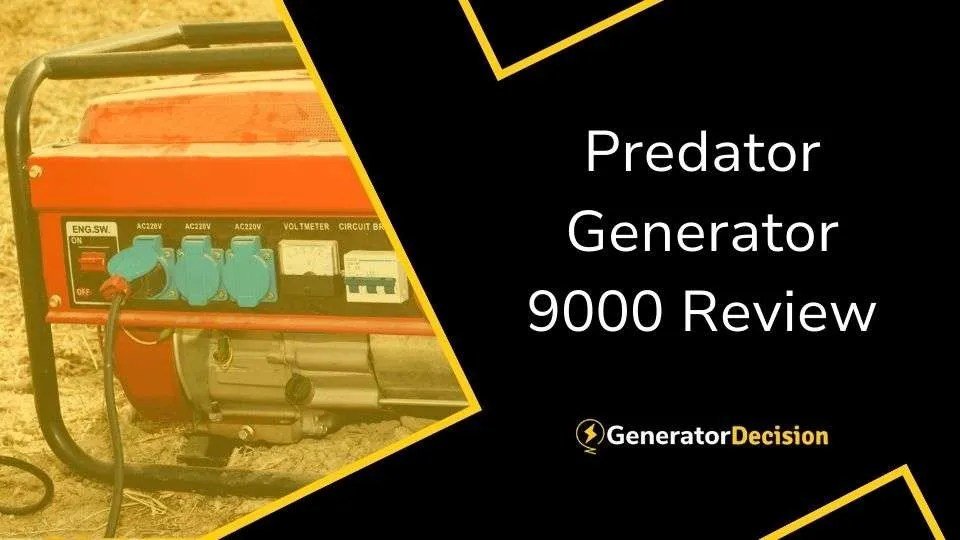
When the lights go out, the job site needs juice, or your RV needs reliable power far from an outlet, a dependable generator isn't just a convenience—it's an essential tool. Enter the Predator Generator 9000, a portable workhorse that's garnered a reputation for delivering robust power at a remarkably competitive price point. In this comprehensive guide, we'll dive deep into the Predator Generator 9000's overview & specifications, dissecting its capabilities, scrutinizing its limitations, and providing you with everything you need to know to make an informed decision and operate it safely.
This isn't just a spec sheet; it's your go-to resource for understanding how this generator performs in the real world, whether you're eyeing it for emergency home backup, a busy construction site, or powering your off-grid adventures.
At a Glance: Predator Generator 9000 Quick Takeaways
- Power Output: Generous 9000 starting watts / 7250 running watts.
- Engine: Reliable 420cc OHV gas engine with electric start and recoil backup.
- Fuel Efficiency: 8-gallon tank delivers ~13 hours runtime at 50% load (approx. 0.6 GPH).
- Safety: Integrated CO Secure technology for automatic carbon monoxide shutdown.
- Portability: Weighs 194 lbs, but features never-flat wheels and fold-down handles.
- Connectivity: Versatile array of 120V, 240V, and 12V DC outlets, including a powerful 50A option.
- Value: Often priced significantly lower than comparable generators, offering exceptional bang for your buck.
- Best For: Backup power, construction, food trucks, RVs, workshops.
- Considerations: Higher THD (not for sensitive electronics), noticeable noise level.
The Heart of the Power: Engine and Performance
At the core of the Predator 9000's impressive output lies its robust 420cc OHV (Overhead Valve) air-cooled gas engine. This engine is the muscle behind the generator's headline numbers: a peak of 9000 starting watts and a steady 7250 running watts. What does that mean for you? It means the capacity to handle the initial surge demand of motor-driven appliances like refrigerators, air conditioners, or power tools, followed by ample continuous power for prolonged use.
Starting the unit is a breeze thanks to the electric start feature, but should your battery be low, a reliable recoil backup starter is also at your fingertips. The engine itself is designed with durability in mind, featuring cast iron cylinder sleeves that contribute to a longer lifespan. And for peace of mind, an automatic low oil shutdown system prevents engine damage by cutting power if oil levels drop too low.
Key Performance Metrics:
- Starting Watts: 9000W
- Running Watts: 7250W
- Engine Type: 420cc OHV Air-Cooled Gas Engine
- Start System: Electric Start with Recoil Backup
- Fuel Capacity: 8 Gallons
- Runtime: Approximately 13 hours at 50% load
- Noise Level: 76-78 dB (comparable to a busy street)
- Weight: 194 lbs
- Dimensions: 26.9″ L x 22″ W x 22.8″ H
The generous 8-gallon fuel tank is a standout feature, allowing the Predator 9000 to deliver impressive runtimes. At a 50% load, you're looking at about 13 hours of continuous operation, consuming roughly 0.6 gallons per hour. This extended runtime is a huge advantage for overnight power outages or long days on a job site, minimizing the need for frequent refueling stops.
Power Distribution: Outlets for Every Need
A generator is only as good as its ability to distribute power efficiently, and the Predator 9000 doesn't disappoint. It offers a comprehensive array of outlets designed to tackle various power demands, from standard household appliances to heavy-duty construction equipment.
Here’s a breakdown of the available outlets:
- Four 120V 20A Outlets: Standard household outlets, perfect for lights, smaller tools, phone chargers, and most common appliances.
- One 120V/240V 30A Twist-Lock Outlet (L14-30R): Ideal for connecting to a transfer switch for home backup or powering larger tools and RVs with 30-amp service.
- One 120V/240V 50A Outlet (14-50R): This high-capacity outlet is a significant differentiator, allowing you to power even larger appliances, commercial cooking equipment, or RVs with 50-amp service. It's particularly valuable for construction sites with heavy machinery.
- One 12V DC Outlet: A handy addition for charging automotive batteries or running 12V DC accessories.
This versatile selection ensures you can plug in almost anything you need, making the Predator 9000 a truly flexible power solution.
Safety First: Built-in Protections
Operating a generator involves inherent risks, primarily from carbon monoxide (CO) poisoning. The Predator 9000 addresses this critical concern with its integrated CO Secure technology. This innovative safety feature constantly monitors carbon monoxide levels around the generator. If dangerous concentrations are detected, the generator will automatically shut down, significantly reducing the risk of CO exposure for you and your family. It's a vital safeguard that every modern generator should have, and it underscores the Predator 9000's commitment to user safety.
Beyond CO Secure, the unit also includes:
- Automatic Low Oil Shutdown: As mentioned, this protects the engine from damage by stopping operation when oil levels are insufficient.
- Overload Protection: Integrated circuit breakers prevent damage to the generator and connected devices in case of an overload.
- Comprehensive Control Panel: The panel provides real-time readouts of voltage, frequency, and runtime, allowing you to monitor the generator's performance and ensure stable power delivery.
These features, combined with proper operating practices, help ensure a safer power experience. For a deeper dive into safe operating procedures, you might find our guide on understanding Predator Generator 9000 safety protocols incredibly helpful.
Real-World Power: Where the Predator 9000 Shines
The Predator 9000 isn't just about raw numbers; it's about practical utility. Its substantial power output and versatile connectivity make it suitable for a wide array of applications.
Household Backup
When the grid goes down, the Predator 9000 can be a lifesaeline. It's capable of running most essential household appliances simultaneously, ensuring comfort and continuity during outages. Imagine keeping your:
- Refrigerator and freezer humming.
- Furnace fan circulating heat (or an air conditioner cooling).
- Well pump supplying water.
- Lights, TVs, and microwaves operational.
With a properly installed transfer switch, it can reliably power a significant portion of your home.
Construction Site Workhorse
For contractors and builders, consistent power is non-negotiable. The 9000 watts starting power means it can fire up power-hungry tools like circular saws, air compressors, and concrete mixers without breaking a sweat. The 50-amp outlet is particularly useful for larger, more specialized equipment, making this generator a valuable asset on any job site.
Food Trucks & Events
Mobile businesses, especially food trucks, rely heavily on robust, consistent power. The Predator 9000 delivers exactly that, handling commercial refrigeration, cooking equipment, lighting, sound systems, and POS terminals with ease. Its 13-hour runtime at half load means you can operate for extended periods without interrupting service for refueling, a crucial advantage during long events.
Large RV Adventures
For RV enthusiasts with 50-amp service, the Predator 9000 can power virtually everything in your home-on-wheels. This includes demanding appliances like a 15,000 BTU air conditioner, electric water heater, microwave, and comprehensive entertainment systems, allowing you to enjoy all the comforts of home even when boondocking. To get the most out of your setup, you'll want to optimize your Predator Generator 9000 for peak RV performance.
Workshops & Small Businesses
From woodworking shops to small manufacturing facilities, stable power is key. The Predator 9000 can reliably run tools like table saws, planers, dust collection systems, air compressors, and even some welding equipment, empowering productivity without the need for a grid connection.
What to Consider: Limitations and Trade-offs
While the Predator 9000 offers significant advantages, it's crucial to understand its limitations to ensure it aligns with your specific needs. No generator is perfect for every scenario.
Total Harmonic Distortion (THD)
One of the most important considerations is its Total Harmonic Distortion (THD), which is noted to be less than 23%. While perfectly acceptable for most appliances and power tools, this level of THD is too high for safely powering sensitive electronics like laptops, smartphones, modern smart TVs, and complex medical devices. These devices typically require a "cleaner" power signal, ideally with a THD of less than 5%. If your primary use involves delicate electronics, an inverter generator would be a more suitable choice.
Noise Level
At 76-78 dBA, the Predator 9000 is, frankly, somewhat loud. To put that in perspective, it's comparable to the noise level of a garbage disposal, a vacuum cleaner, or a busy street. While this might be tolerable on a construction site or during an emergency, it could be a nuisance in quieter environments, such as a campground or a residential neighborhood late at night. Plan your generator placement accordingly, keeping a respectful distance from neighbors.
Durability Reputation
The Predator line is known for its value, but customer reviews sometimes mention concerns about units not working "out of the box" or experiencing issues relatively early in their lifespan compared to premium, significantly more expensive brands. While many users report excellent long-term performance, it's worth noting that its durability reputation, while generally positive, may not reach the same pinnacle as top-tier industry leaders. However, with proper maintenance, you can expect a lifespan of 1,500-2,000 engine hours and 2,000+ alternator hours.
Exceptional Value: Power Without the Premium Price Tag
Perhaps one of the most compelling aspects of the Predator 9000 is its incredible value proposition. Typically priced between $799-$899, it dramatically undercuts comparable 9000-watt generators from other major brands, which often range from $1,200-$1,800. This significant price difference makes robust portable power accessible to a much wider audience, without sacrificing essential features or power output.
When you factor in its power capacity, fuel efficiency, safety features like CO Secure, and versatile outlet options, the Predator 9000 truly stands out as a budget-friendly powerhouse. It offers a fantastic return on investment, especially for intermittent use cases like emergency backup or project-based work.
Getting Started: Setup and First Use
Unboxing your new Predator 9000 is an exciting moment, but before you fire it up, a few crucial setup steps are necessary to ensure safe and optimal operation.
- Unbox and Inspect: Carefully remove the generator from its packaging. Inspect for any signs of shipping damage.
- Install Wheels and Handles: Attach the integrated never-flat wheels and fold-down handles. These are essential for mobility, as the generator weighs 194 lbs.
- Add Engine Oil: The generator typically ships without oil. You'll need to add approximately 1.2 quarts of SAE 10W-30 oil. For cold environments (below 40°F), 5W-30 is recommended. Do not overfill.
- Connect the Battery: The electric start battery will need to be connected. Locate the battery terminals, typically under a cover, and connect the positive (+) and negative (-) leads securely.
- Add Fresh Unleaded Gasoline: Use fresh, unleaded gasoline with an octane rating of 87 or higher, and ensure it contains no more than 10% ethanol. Stale fuel or high ethanol content can cause performance issues.
- Properly Ground the Generator: This is a critical safety step. Connect a ground wire from the generator's grounding terminal to a suitable grounding rod driven into the earth. Never skip this step.
Firing It Up: Starting Your Generator
Once set up, starting the Predator 9000 is straightforward, whether you prefer the convenience of electric start or the reliability of recoil.
Starting (Electric)
- Unplug Everything: Ensure no appliances are plugged into the generator.
- Engine Switch: Turn the engine switch to the "ON" position.
- Fuel Valve: Move the fuel valve to the "ON" position.
- Choke Lever: For a cold engine, move the choke lever to the "CLOSED" position. For a warm engine, keep it "OPEN."
- Press Start: Press and hold the electric start button.
- Choke Adjustment: As the engine starts and warms up, gradually move the choke lever to the "OPEN" position.
Starting (Manual Recoil)
- Follow Steps 1-4 for Electric Start: Prepare the generator as you would for an electric start.
- Pull Recoil Starter: Grasp the recoil starter handle. Pull it slowly until you feel resistance, then give a quick, strong pull.
- Choke Adjustment: Once the engine starts, gradually move the choke lever to the "OPEN" position as it warms up.
Safety Protocols: Powering Up Responsibly
Operating a portable generator safely is paramount. Following these guidelines will protect you, your family, and your property.
- Outdoor Use ONLY: Never operate a generator indoors or in partially enclosed areas, including garages, basements, or sheds. Exhaust contains deadly carbon monoxide. Maintain at least 20 feet of clearance from doors, windows, and vents to prevent CO from entering occupied spaces.
- Keep It Dry: Avoid operating the generator in wet conditions unless it's under an open, well-ventilated canopy that does not obstruct airflow.
- Use Proper Extension Cords: Always use heavy-duty, outdoor-rated extension cords (10- or 12-gauge) that are long enough to keep the generator well away from your home. Inspect cords for damage before each use.
- Balance Loads: When using 240V power, distribute loads evenly across the generator's phases to prevent overloading one side.
- Cool Down Before Refueling: Allow the generator to cool for at least 15 minutes before adding fuel. Gasoline is highly flammable, and hot engine components can ignite fumes.
- Home Wiring: For home backup, always use a properly installed transfer switch or interlock device. Never "backfeed" power by plugging the generator into a wall outlet, as this can electrocute utility workers or neighbors and damage your generator.
Understanding these safety measures is as important as knowing the specifications of the Predator Generator 9000.
Keeping It Running: Essential Maintenance Guide
To ensure your Predator 9000 provides years of reliable service, consistent maintenance is crucial. A proactive approach will extend its lifespan and prevent unexpected breakdowns.
Maintenance Schedule Highlights
- Before Each Use: Check engine oil and fuel levels, inspect the air filter, look for loose/damaged parts, and clear any debris.
- Every 20 Hours (Break-In Period): Change the engine oil. This is vital to remove manufacturing contaminants.
- Every 50 Hours / 3 Months (Normal Use): Change engine oil, clean the air filter, check/clean the spark plug, inspect the fuel filter, and clean the fuel sediment cup.
- Every 100 Hours / 6 Months (Heavy Use): Perform all 50-hour tasks, plus replace the air filter, replace the fuel filter, clean the carburetor, check/adjust valve clearance, and clean the fuel tank and screen.
- Every 300 Hours / Annually: Replace the spark plug (F7TC equivalent), replace fuel lines, inspect electrical connections, perform a compression test, and deep clean cooling fins.
Key Maintenance Tasks
- Oil Changes: Run the generator briefly to warm the oil, which helps it drain more easily. Turn off the generator, drain the old oil, and refill with approximately 1.2 quarts of fresh 10W-30 oil.
- Air Filter: For foam elements, clean with liquid detergent and water, then saturate with clean engine oil and squeeze out excess. Paper elements can be cleaned by tapping out debris or replaced if heavily soiled.
- Battery: The 12V 14-18AH sealed lead-acid battery requires clean, tight connections. Disconnect the negative terminal for long-term storage and consider a trickle charger if used infrequently. Replace the battery every 2-3 years.
Long-Term Storage: Putting Your Generator Away
If you anticipate not using your generator for over 30 days, proper storage is essential to prevent fuel system issues and battery degradation.
- Fuel Stabilizer: Add a high-quality fuel stabilizer to the gasoline tank and run the generator for 10 minutes to circulate it.
- Run Dry: Turn off the fuel valve and allow the engine to run until it stops from fuel starvation. This prevents gumming up the carburetor.
- Change Oil: Perform an oil change.
- Cylinder Protection: Remove the spark plug, pour a tablespoon of clean engine oil into the cylinder, and slowly pull the starter rope a few times to distribute the oil. Reinstall the spark plug.
- Battery Care: Disconnect the battery and store it in a cool, dry place, ideally on a trickle charger.
- Clean and Cover: Clean the exterior of the generator and cover it with a breathable generator cover. Store in a clean, dry location.
When Things Go Sideways: Troubleshooting Common Issues
Even well-maintained generators can encounter issues. Here's a quick troubleshooting guide for common problems with your Predator Generator 9000:
- Generator Won’t Start:
- Checks: Fuel level/freshness, oil level (low-oil shutdown engaged?), battery charge, spark plug condition, fuel valve position, choke setting, air/fuel filters.
- Action: Ensure fresh fuel, top off oil, charge/replace battery, clean/replace spark plug, verify valve and choke settings. Carburetor cleaning may be necessary for persistent issues.
- Electric Start Fails (Recoil Works):
- Checks: Battery connections (clean, tight), battery charge/health, starter solenoid (listen for clicking), start switch.
- Action: Inspect and clean connections, charge or replace the battery, test the solenoid, test the start switch.
- Generator Runs, But No Electricity Output:
- Checks: Main circuit breaker, individual outlet circuit breakers, GFCI outlets (reset them!), individual outlets themselves.
- Action: Reset breakers, test outlets. Consider potential Automatic Voltage Regulator (AVR) failure or loose internal connections (requires professional service).
- Voltage Output Too High/Low:
- Checks: Engine speed (should be ~3600 RPM).
- Action: Verify engine speed. This can sometimes indicate an AVR issue or excessive load.
- Engine Runs Rough or Surges:
- Checks: Fuel quality, carburetor cleanliness, air filter condition, spark arrester.
- Action: Clean the carburetor, drain/replace stale fuel, clean/replace air filter, clean spark arrester.
- Engine Lacks Power:
- Checks: Carbon buildup, altitude effects (performance drops ~3.5% per 1,000 feet above sea level), incorrect valve clearance, compression issues, restricted exhaust.
- Action: Regular maintenance helps prevent carbon buildup. Consult a mechanic for valve clearance or compression issues.
Maximizing Your Investment: Tips for Optimal Performance
Getting the most out of your Predator 9000 involves smart operational practices and thoughtful environmental considerations.
Efficient Operation
- Load Management: Always start the largest motor-driven loads (like well pumps or air conditioners) first, as they require significant surge wattage. Then, add smaller loads.
- Distribute Power: Distribute loads evenly across different outlets, especially when utilizing 240V power.
- Understand Wattage Needs: Remember that motor-driven appliances need 3-7 times their running wattage to start.
- Aim for 80% Capacity: For continuous, reliable operation and to allow for surge headroom, try to keep your total running load at no more than 80% of the generator's running capacity (approx. 5800 watts).
Fuel Management
- Fresh Fuel is Key: Always use fresh gasoline (within 30 days of purchase).
- Stabilize for Storage: If fuel will remain in the tank for longer than two weeks, add a fuel stabilizer.
Mobility & Placement
- Terrain Adaptability: Consider aftermarket pneumatic tires if you frequently move the generator over rough terrain.
- Permanent Solutions: For home backup, a permanent concrete pad with a ramp can make positioning easier.
- Transport: Truck loading ramps are invaluable for safe transport.
Protection & Environment
- Weather Protection: Use a simple, open-sided canopy during operation to shield the generator from sun or light rain, ensuring adequate ventilation.
- Storage Cover: A quality, breathable cover protects against dust, moisture, and UV damage during storage.
- Cold Weather Care: In temperatures below 40°F, consider using synthetic oil, maintaining your battery (a trickle charger is vital), and using fuel additives designed for cold weather.
- Corrosion Prevention: In high-humidity or coastal environments, apply corrosion protection to electrical connections.
Beyond the Box: Parts & Accessories to Consider
To keep your Predator 9000 running smoothly and enhance its utility, here are some essential parts and useful accessories.
Essential Replacement Parts
- Air Filters: Critical for engine health.
- Spark Plugs: Carry spares (F7TC equivalent).
- Engine Oil: Always have 10W-30 on hand.
- Fuel Filters: Regular replacement maintains fuel system integrity.
Useful Accessories
- Generator Cover: Protects from elements and dust during storage.
- Hour Meter: Tracks usage for precise maintenance scheduling (some models include this).
- Extended Run Fuel System: For even longer runtimes without refueling.
- Transfer Switch Kit: Essential for safely connecting to your home's electrical system.
- Maintenance Kit: Often includes spark plugs, air filter, oil, and a funnel.
- Wheel Upgrade Kit: For more robust mobility.
- Parallel Kit: (Note: The Predator 9000 typically does not support parallel operation with another unit due to its size and conventional alternator design, unlike smaller inverter generators. Verify this for your specific model if considering).
Is the Predator 9000 Right for You?
The Predator 9000 offers a compelling package, but like any significant purchase, its suitability depends on your specific needs and expectations.
Ideal For:
- Intermittent Emergency Backup: Perfect for providing reliable power during occasional outages.
- Mobile Businesses: Food trucks, mobile workshops, or event vendors needing high-capacity, portable power.
- Construction & Renovation Projects: Powering multiple tools and larger equipment on job sites.
- Large RVs with 50-Amp Service: Capable of running almost everything in your rig.
- Workshops & Small Businesses: Delivering stable power for tools and machinery.
May Not Be Ideal For:
- Full-Time Off-Grid Power: While capable, continuous heavy-duty use might be better served by a more robust, often stationary, system.
- Ultra-Quiet Applications: Its 76-78 dBA noise level means it's not suitable for situations where silence is a priority.
- Frequent Single-Person Movement: At 194 lbs, while portable with wheels, it's a heavy unit to move alone repeatedly.
- Sensitive Electronics Exclusively: The higher THD makes it unsuitable for powering laptops, phones, and modern smart TVs directly.
- Whole-House Automatic Backup Systems: It's a manual start portable unit; for seamless, automatic whole-house power, a standby generator is the right choice.
If you're still weighing your options, exploring a full breakdown of the Predator Generator 9000's features and benefits can help solidify your decision.
Powering On with Confidence
The Predator Generator 9000 stands out as a powerful, versatile, and exceptionally cost-effective solution for a wide range of portable power needs. From its robust engine and ample wattage to its comprehensive outlet selection and vital safety features like CO Secure, it delivers impressive performance without the premium price tag.
While its THD and noise level are important considerations, understanding these limitations allows you to wield its strengths effectively. By adhering to proper setup, operation, and maintenance guidelines, you'll ensure your Predator 9000 remains a reliable workhorse for years to come, ready to tackle power demands whenever and wherever they arise. With this knowledge in hand, you're well-equipped to make the Predator 9000 a valuable asset in your arsenal.