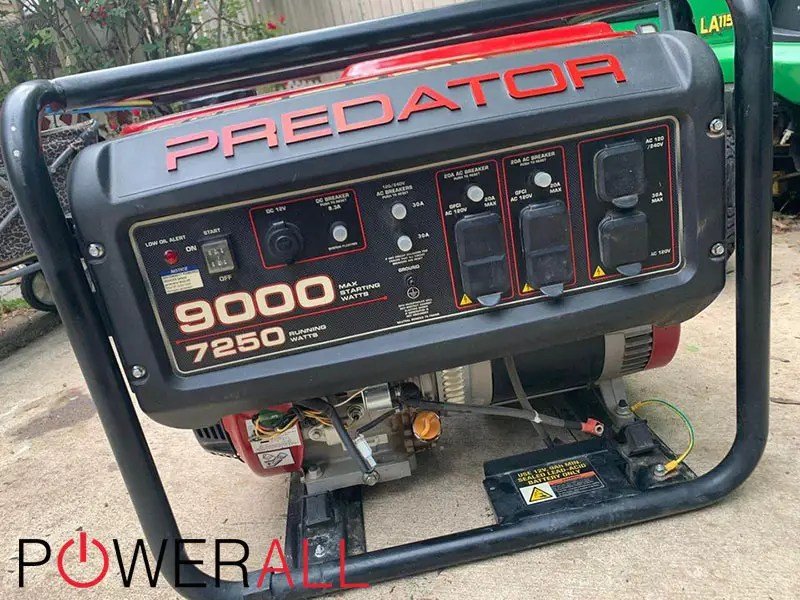
You’ve invested in a powerhouse: the Predator Generator 9000. It's not just another piece of equipment; it's your reliable partner for powering through outages, keeping a job site humming, or making off-grid adventures possible. But like any high-performing machine, its reliability and long life hinge entirely on consistent, smart Predator Generator 9000 maintenance and longevity practices. Skimping on care won't just cost you money down the line; it could leave you powerless when you need it most.
This guide isn't about simply ticking boxes; it’s about understanding what makes your 9000-watt beast tick and how to keep it purring efficiently for years to come. We’ll walk through everything from routine checks to tackling common hiccups, ensuring your generator is always ready to deliver those 7250 running watts when duty calls.
At a Glance: Your Quick Maintenance Roadmap
- Before Each Use: Check oil, fuel, air filter; inspect for damage.
- Every 20 Hours (Break-In): First oil change is critical.
- Every 50 Hours / 3 Months (Normal Use): Change oil, clean air filter, check spark plug, inspect fuel filter/sediment cup.
- Every 100 Hours / 6 Months (Heavy Use): Replace air filter, fuel filter, clean carburetor, check valve clearance, clean fuel tank.
- Every 300 Hours / Annually: Replace spark plug and fuel lines, inspect electrical, compression test, deep clean cooling fins.
- Battery Care: Trickle charge for storage, replace every 2-3 years.
- Long-Term Storage: Stabilize fuel, run dry, change oil, fog cylinder, disconnect battery, clean, cover.
Why Your Predator 9000 Deserves Top-Tier Care
The Predator 9000 isn't just any portable generator. It strikes an impressive balance between high output and practical portability, delivering 9000 starting watts and 7250 running watts—power that rivals some smaller whole-house systems at a fraction of the cost. With its robust 420cc OHV air-cooled engine, complete with cast iron cylinder sleeves and automatic low oil shutdown, it's built for demanding tasks, from powering essential home needs during a storm to running multiple tools on a construction site.
This isn't a small recreational unit; it's a serious workhorse. Its value, typically between $799-$899, is outstanding for its capability. Protecting this investment means understanding its needs and proactively addressing them. Proper care isn't just about avoiding breakdowns; it's about preserving the engine's 1,500-2,000 hour lifespan, ensuring the alternator keeps delivering clean power for 2,000+ hours, and keeping structural components solid for over a decade. In short, a little maintenance goes a long way in safeguarding your portable power solution. If you want to discover more about the Predator Generator 9000, we have a full breakdown available.
The Foundation: Pre-Run Checks & Safe Operation
Think of these as your generator's pre-flight checklist. Skipping these steps is like driving without looking at your dashboard – you might get away with it for a while, but eventually, trouble will find you.
Before You Fire It Up: Every-Use Checklist
Every single time you plan to start your Predator 9000, take a few minutes for these quick checks. They are your first line of defense against unexpected issues.
- Check the Oil Level: This is paramount. The Predator 9000 features automatic low oil shutdown, a great safety feature that prevents catastrophic engine damage, but it's far better to catch low oil before it becomes an issue. Ensure the oil is at the full mark using the dipstick.
- Inspect Fuel Levels and Freshness: Make sure you have enough fresh 87+ octane unleaded gasoline (with a maximum of 10% ethanol) for your planned run. Stale fuel is a notorious generator killer, leading to starting problems and carburetor issues.
- Quick Air Filter Visual: Glance at the air filter. Is it visibly clogged with debris or dust? A blocked air filter can choke your engine, leading to poor performance and increased fuel consumption.
- General Inspection: Take a quick look around the unit. Are there any loose wires, fuel leaks, or signs of physical damage? Remove any debris that might have accumulated around the engine or exhaust.
Safety First, Always: Operating Your Generator Responsibly
Your Predator 9000 is powerful, and with that power comes a responsibility to operate it safely. These practices not only protect you and your family but also prevent damage to the generator itself.
- Outdoor Operation Only: This cannot be stressed enough. Always operate your generator outdoors, at least 20 feet away from doors, windows, and vents. The CO Secure technology is an excellent safety feature that monitors carbon monoxide levels and shuts down the generator if dangerous concentrations are detected, but it's a backup, not an excuse to operate indoors. Carbon monoxide is silent, odorless, and deadly.
- Avoid Wet Conditions: Unless your generator is under an open, well-ventilated canopy, keep it out of rain and snow. Moisture can damage electrical components and create a shock hazard.
- Use Proper Extension Cords: Always use heavy-duty, outdoor-rated 10- or 12-gauge extension cords for connecting appliances. Undersized cords can overheat, damaging both the cord and your appliances, and leading to power loss.
- Balance Loads: When using 240V circuits, try to balance the electrical load across the two legs. This ensures efficient power delivery and prevents overloading one side of the generator.
- Refueling Safety: Turn off and cool the generator for at least 15 minutes before attempting to refuel. Gasoline is highly flammable, and spilled fuel on a hot engine is a recipe for disaster.
- Never Backfeed Your Home: For home wiring, you must use a properly installed transfer switch or interlock device. Directly plugging your generator into a wall outlet (backfeeding) is incredibly dangerous. It can send power back into the utility grid, potentially electrocuting utility workers or damaging your home's electrical system and the generator itself.
The Heartbeat of Longevity: Essential Scheduled Maintenance
This is where the real work for extending your Predator 9000's life happens. Following the recommended maintenance schedule is non-negotiable for reliable performance.
Oil: The Lifeblood of Your Engine
Changing your engine oil isn't just a suggestion; it's the single most crucial step for extending your generator's life. The Predator 9000's robust 420cc engine, with its cast iron cylinder sleeves, relies on clean oil to lubricate moving parts, dissipate heat, and prevent premature wear.
- Schedule:
- First Oil Change: After the initial 20 hours of operation (break-in period). This is critical to remove metal fragments from the engine's initial wear.
- Normal Use: Every 50 hours or every 3 months, whichever comes first.
- How-To:
- Warm the engine for a few minutes. This helps the oil flow more easily.
- Place a drain pan beneath the oil drain plug.
- Remove the drain plug and allow all the old oil to completely drain.
- Replace the drain plug securely.
- Refill the crankcase with approximately 1.2 quarts of fresh SAE 10W-30 engine oil. For colder climates (below 32°F / 0°C), 5W-30 is recommended.
- Check the dipstick to ensure the oil level is at the full mark. Do not overfill.
Pro Tip: Always dispose of used oil responsibly at an approved recycling center.
Breathing Easy: Air Filter Care
A clean air filter is essential for the engine to "breathe" properly, ensuring efficient combustion and preventing abrasive dirt particles from entering the engine cylinders.
- Schedule:
- Clean: Every 50 hours or 3 months.
- Replace: Every 100 hours or 6 months, especially with heavy use or in dusty environments.
- How-To:
- Carefully remove the air filter housing cover.
- If your Predator 9000 has a foam element, wash it in warm, soapy water (detergent is fine), rinse thoroughly, and allow it to air dry completely. Then, saturate it lightly with clean engine oil and squeeze out any excess.
- If it has a paper element, gently tap it against a hard surface to dislodge loose dirt. Avoid using compressed air, which can damage the filter's fibers. Replace if heavily soiled or damaged.
- Reinstall the filter and cover securely.
Sparking Life: Ignition System Check-Up
A healthy spark plug ensures consistent ignition, leading to easy starts and smooth engine operation.
- Schedule:
- Check/Clean: Every 50 hours or 3 months.
- Replace: Every 300 hours or annually. The recommended replacement is an F7TC equivalent.
- How-To:
- Carefully remove the spark plug boot and then the spark plug using a spark plug wrench.
- Inspect the electrode for carbon buildup, wear, or damage. A light tan or gray color is ideal.
- If dirty, clean with a wire brush or spark plug cleaner.
- Check the gap using a feeler gauge and adjust if necessary according to your owner's manual (typically around 0.028-0.031 inches).
- Reinstall the spark plug, ensuring it's tightened correctly, and reattach the boot.
Fuel System Purity: Keeping the Flow Clean
The fuel system, from tank to carburetor, needs to be free of contaminants and varnish for the engine to receive a consistent, clean supply of fuel. Stale fuel, especially with ethanol, can quickly degrade components.
- Schedule:
- Inspect Fuel Filter/Sediment Cup: Every 50 hours or 3 months.
- Clean Carburetor, Fuel Tank, Screen: Every 100 hours or 6 months.
- Replace Fuel Lines: Every 300 hours or annually.
- Why it's Critical: Ethanol in gasoline attracts water and can corrode metal and rubber components, leading to clogs and leaks. Regular inspection and cleaning prevent these issues.
Powering Up: Battery Health for Electric Start
The Predator 9000 boasts a convenient electric start system, powered by a built-in 12V 14-18AH sealed lead-acid battery. A dead battery means you'll be relying on the recoil backup, which isn't ideal for a generator of this size.
- Care:
- Keep battery terminals clean and free of corrosion.
- For infrequent use or during long storage periods, connect the battery to a trickle charger. This prevents deep discharge and extends its life.
- Replacement: Expect to replace the battery every 2-3 years, as lead-acid batteries naturally degrade over time.
The Deeper Dive: Less Frequent but Critical Checks
Some maintenance tasks don't need to happen every month, but they are vital for long-term health and efficiency.
- Check/Adjust Valve Clearance: Every 100 hours or 6 months. Incorrect valve clearance can lead to reduced performance, hard starting, and even engine damage. This is often a job best left to someone comfortable with engine mechanics.
- Compression Test: Every 300 hours or annually. A compression test gives you insight into the engine's internal health. Low compression can indicate worn piston rings, valves, or head gasket issues.
- Deep Clean Cooling Fins: Every 300 hours or annually. The air-cooled engine relies on these fins to dissipate heat. Clogged fins lead to overheating, which severely shortens engine life. Use compressed air or a brush to clear them.
- Inspect Electrical Connections: Every 300 hours or annually. Check all wiring and connections for signs of wear, corrosion, or looseness. Secure any loose connections.
When Things Go Sideways: Troubleshooting Common Issues
Even with the best maintenance, generators can occasionally act up. Knowing how to diagnose common problems quickly can save you a service call and get your power back online faster, preventing minor issues from escalating.
Engine Won't Start? Your Checklist
This is perhaps the most common and frustrating issue. Before panicking, systematically go through these potential culprits:
- Empty or Stale Fuel: Did you forget to fill up? Or has the gas been sitting for months? Drain old fuel and replace with fresh, stabilized gasoline.
- Low Oil Shutdown: Check your oil level. The Predator 9000 will prevent starting if the oil is below the safe operating level.
- Dead Battery/Loose Connections: For electric start, ensure the battery is charged and terminals are clean and tight. Try the recoil start as a backup.
- Fouled Spark Plug: Remove the spark plug and inspect it (see Sparking Life section). Clean or replace as needed.
- Closed Fuel Valve or Incorrect Choke: Sounds simple, but easy to overlook. Ensure the fuel valve is ON and the choke is set correctly for a cold start (CLOSED) or warm start (OPEN).
- Clogged Air/Fuel Filter: A blocked filter restricts air or fuel flow. Inspect and clean/replace as necessary.
Power Problems: Low Output or Fluctuations
If your generator starts but isn't producing power, or if the voltage is inconsistent, here's what to check:
- Tripped Circuit Breakers: Both the main breaker on the control panel and any individual GFCI outlets can trip. Reset them.
- Faulty Outlets: Try different outlets on the generator.
- AVR Failure/Failing Capacitors: The Automatic Voltage Regulator (AVR) helps maintain stable output. If it or the capacitors fail, voltage can drop or become erratic. This usually requires professional service.
- Incorrect Engine Speed: The engine must run at approximately 3600 RPM to produce the correct 60Hz frequency and voltage. Use a tachometer if you suspect the speed is off.
- Excessive Load: Are you trying to pull too much power? The generator might be overloaded, tripping breakers or struggling to maintain voltage.
Rough Running & Lack of Power
An engine that runs rough, surges, or lacks its usual power can be a sign of several issues affecting fuel delivery or combustion.
- Dirty Carburetor/Stale Fuel: The most common culprit. Gummy residue from stale fuel clogs tiny passages in the carburetor. A thorough cleaning or rebuild may be necessary.
- Dirty Air Filter: Restricts airflow, making the engine run rich and lose power.
- Clogged Spark Arrester: The spark arrester, located in the muffler, can get clogged with carbon, restricting exhaust flow. Clean it if necessary.
- Governor Issues: The governor system maintains engine speed under varying loads. If it's malfunctioning, the engine might surge or run erratically.
- Carbon Buildup, Altitude Effects, Incorrect Valve Clearance, Low Compression, Restricted Exhaust: These are deeper engine issues. Note that for every 1,000 feet of altitude, expect about a 3.5% decrease in power output.
Beyond the Engine: Mechanical & Electrical Glitches
Sometimes, issues aren't directly related to the engine's core function but still impact performance or safety.
- Excessive Vibration: Can be caused by loose mounting hardware, damaged components (like a bent crankshaft, though rare), or internal engine problems. Check for loose bolts first.
- Oil Leaks: Inspect for a loose drain plug, damaged gaskets (oil pan, valve cover), an overfilled crankcase, or a cracked engine case. Address leaks promptly to prevent low oil situations.
- Battery Won't Hold a Charge: An old battery, a failure in the charging system, a parasitic drain (something drawing power when off), or loose connections can be the cause.
- Erratic Voltage Readings: Beyond AVR issues, this could stem from loose electrical connections, damaged wires, worn carbon brushes (in the alternator), or a faulty instrument panel.
Beyond Basics: Maximizing Your Generator's Lifespan & Performance
Taking proactive steps and implementing smart habits can significantly extend your Predator 9000's operational life and ensure it performs at its peak.
Smart Load Management: The 80% Rule
Don't push your generator to its absolute limits constantly. While the Predator 9000 delivers 7250 running watts, it's wise to adhere to the "80% rule," aiming for no more than approximately 5800 continuous watts.
- Start Larger Loads First: When connecting multiple appliances, plug in and start larger, motor-driven items (like a refrigerator or well pump) first. They draw more power on startup (surge watts).
- Distribute Loads Evenly: Try to spread your loads across the generator's various outlets to prevent overloading a single circuit.
- Why it Prevents Strain: Operating below maximum capacity reduces stress on the engine and alternator, improves fuel efficiency, and minimizes wear and tear, contributing to a longer lifespan.
Fuel Savvy: Freshness & Stabilizer
Fuel management is often overlooked but plays a huge role in longevity, especially for a generator that might sit idle for long periods.
- Always Use Fresh Fuel: Ethanol-blended gasoline degrades over time, especially when exposed to air. Buy gasoline only when you need it, and aim to use it within 30 days.
- Fuel Stabilizer for Storage: If you anticipate storing your generator for more than 30 days, add a high-quality fuel stabilizer to the tank. Run the engine for 5-10 minutes afterward to ensure the stabilizer circulates throughout the fuel system, protecting the carburetor and fuel lines from varnish buildup.
Protecting Your Investment: Shelter & Storage
Your generator is tough, but it's not invincible against the elements. Proper protection can mean the difference between years of reliable service and premature corrosion or damage.
- Operational Shelter: When running, protect your generator from rain, snow, and direct sunlight with an open, breathable canopy or a dedicated generator tent. Remember, it must be well-ventilated to prevent carbon monoxide accumulation.
- Quality Breathable Cover: When not in use, store your generator in a dry, covered area. A quality breathable cover will protect it from dust, debris, and moisture while allowing trapped humidity to escape.
- Long-Term Storage (Over 30 Days):
- Add fuel stabilizer and run the engine for a few minutes.
- Turn off the fuel valve and let the generator run until it completely runs out of fuel and stops. This empties the carburetor bowl, preventing gumming.
- Change the engine oil.
- Remove the spark plug and pour about a tablespoon of fresh engine oil into the cylinder. Gently pull the recoil starter a few times to distribute the oil, then reinstall the spark plug. This "fogs" the cylinder to prevent rust.
- Disconnect the 12V battery to prevent parasitic drain.
- Clean the exterior of the generator thoroughly.
- Cover it and store it in a cool, dry place.
Cold Weather Combat
If you operate your generator in freezing temperatures, a few extra steps can make a big difference:
- Synthetic Oil: Switch to a synthetic 5W-30 engine oil. Synthetic oils perform better in extreme temperatures, flowing more easily in the cold and providing superior lubrication.
- Battery Maintenance: Cold weather severely impacts battery performance. Keep your battery on a trickle charger, and ensure connections are pristine. A cold, weak battery will struggle to crank the engine.
Mobility & Convenience Upgrades
While the Predator 9000 comes with integrated never-flat wheels and fold-down handles, you can further enhance its mobility and convenience. Consider:
- Upgraded Pneumatic Wheels: For rougher terrain or easier rolling.
- Custom Dolly: If you move it frequently around a workshop or property.
- Truck Loading Ramps: For safe and easy transport in a pickup.
Essential Spares & Smart Accessories
Being prepared means having the right parts on hand and useful accessories to make your generator experience smoother and safer.
Must-Have Replacement Parts
Don't wait for a breakdown to realize you need a simple part. Keep these essentials stocked:
- Air Filters: Both foam and paper elements, if applicable to your model.
- Engine Oil: A fresh bottle of SAE 10W-30 (or 5W-30 for cold climates).
- Spark Plugs: At least one spare F7TC equivalent spark plug.
- Fuel Filter: Especially if your fuel quality is questionable or you store fuel for extended periods.
Highly Recommended Accessories
These items enhance safety, convenience, and monitoring:
- Generator Cover: A durable, weather-resistant cover.
- Hour Meter: While the Predator 9000 has a built-in one, an external one can provide backup or be easier to read. Critical for tracking maintenance intervals.
- Extended Run Fuel System: For situations where you need longer runtimes without constant refueling (requires careful, safe installation).
- Transfer Switch Kit: Absolutely essential for safely connecting your generator to your home's electrical panel.
- Maintenance Kit: Some manufacturers offer convenient kits with oil, spark plug, and air filter.
- Wheel Upgrade Kit: If you need better mobility than the stock wheels.
The Payoff: Value & Longevity
When you consider the Predator 9000's robust capabilities—powering everything from multiple tools on a construction site to essential household needs during an outage—its price tag of $799-$899 represents exceptional value. But that value truly compounds when you commit to proper maintenance.
Without diligent care, that robust 420cc engine might not see its 1,500-2,000 hour lifespan, and the alternator could falter long before its 2,000+ hour potential. The cost of fuel ($0.6 gallons/hour at 50% load) is a given, but annual maintenance parts might only run you $50-100, and an oil change a mere $10-15 every 50-100 hours. Compare that to the hundreds, if not thousands, it would cost for major repairs or a full replacement. A new battery every 2-3 years at $40-60 is a small price for reliable electric starts.
Your Predator 9000 excels as an intermittent emergency backup, a mobile power solution for businesses and construction, or a robust power source for large RVs and workshops. For those specific applications, its value proposition, coupled with diligent maintenance, makes it an incredibly cost-effective and dependable choice for years to come.
Your Next Step: Keep it Running, Keep it Ready
Your Predator Generator 9000 is a significant investment in peace of mind and productivity. By embracing these maintenance best practices, you’re not just performing tasks; you’re actively safeguarding its lifespan, ensuring reliable performance, and protecting your investment.
Don't let your generator become another forgotten tool in the garage. Keep it clean, keep it fueled with fresh gas, change its oil on schedule, and always store it properly. When the lights go out, or the job calls for portable power, you'll be glad you did the work to keep your Predator 9000 ready to roar.